Put It in Writing: How to Help a Kid Send a Fan Letter an Author Will Actually Read
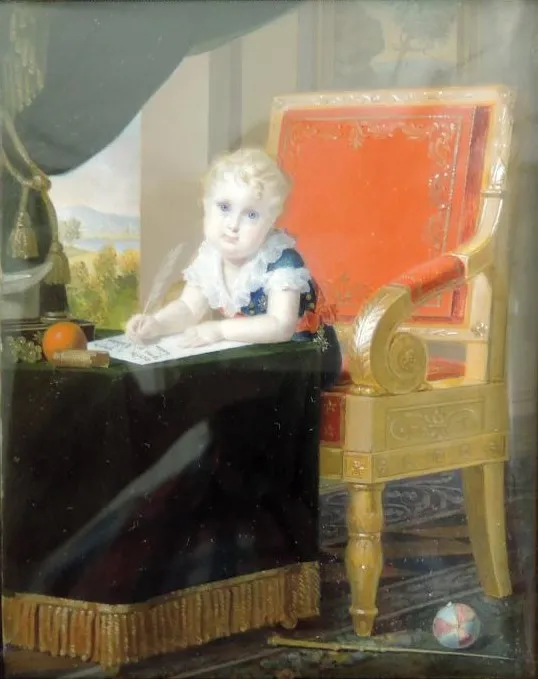
Photo: Aimée Thibault, Public domain, via Wikimedia Commons
There is a moment most young readers know. They close the back cover, sit still for a second, and think: does this person have any idea what they just did to me?
That feeling — gratitude, disbelief, a little outrage that the book ended — is exactly the raw material of a great fan letter. And here is what adults tend to miss: a letter to an author is one of the most efficient writing assignments a kid will ever get. No rubric. No word count. No grade. Just a reader with something to say and a person on the other end who will be genuinely thrilled to hear it.
Why a Fan Letter Beats a Book Report
Think about what a kid actually has to do to write one. They have to name a specific moment. They have to figure out why it worked. They have to turn a feeling into sentences a stranger will understand. That is close reading, persuasion, and personal voice stacked into half a page — and nobody has to say the word 'thesis.'
Teachers call this authentic writing. Kids call it sending mail.
There is a second benefit that is harder to measure. A fan letter makes the invisible labor of books visible. Somebody chose that cliffhanger. Somebody rewrote the last chapter eleven times. Somebody decided the dog should live. Kids who understand that stories are built by people are a lot less intimidated by the idea of building one themselves.
The Three-Part Letter (Keep It Short)
Long letters are a trap. Kids assume more words equal more seriousness, and the whole thing dies somewhere in paragraph four. Aim for four to eight sentences built like this:
- The moment. The exact thing that landed. 'When the elevator opened...' 'Chapter nineteen made me yell.' Naming a real scene is what proves the letter is not a form letter.
- The reaction. What did it make them do or feel? Laugh out loud on the bus? Read the page twice? Look up whether octopuses can actually do that?
- The question. One question, and only one. What are you working on now? Did you always know how it would end? What did you love to read when you were my age?
A closing line and a first name (plus age, if the kid is comfortable) is plenty. No home address, no school name, no phone number. If the family wants a reply, the return address goes on the envelope, and a grown-up handles that part.
The Conversation Before the Draft
Kids write better letters when they talk first. A few questions will pull the good material out:
- Which part did you almost skip because you could not wait to find out what happened next?
- Was there a sentence you read twice on purpose?
- Did any character remind you of someone we know? Who?
- If you could ask the author one thing and they had to answer, what would it be?
Jot down the answers as the kid says them. Their spoken phrasing is usually sharper than their written phrasing, and they can build the letter out of their own words instead of yours.
Where Does It Actually Go?
There are three reliable routes, and all of them are grown-up territory:
- The publisher's website. Most children's publishers have a contact page that accepts mail for their authors. It does get forwarded, but it can take a couple of months.
- The author's own site. Plenty of writers keep a contact page or a note about fan mail. Read that note first — some ask for a specific form, and some say up front that they cannot answer individually.
- In care of the publisher. A letter addressed to the author, c/o the publisher's children's division, is an old-fashioned approach that still works.
A few practical details: some authors mention a self-addressed stamped envelope for replies, so check before assuming. And never promise a response. Most writers receive far more mail than they can answer, and a kid braced for a letter they never get will read that silence as a verdict on their writing.
If a school visit or a bookstore event is on the calendar, a letter handed over in person is the highest-percentage play in the whole game.
When Nothing Comes Back
Set expectations out loud before the envelope hits the mailbox: the letter's job is to say thank you, not to score a reply. Then, if something does arrive, treat it like the small miracle it is and put it somewhere safe, because that kid will want to show it to people for years.
If no reply comes, there is still a decent consolation prize. The letter did its work anyway. The kid said something true to a stranger, in writing, on purpose. That is the entire skill.
Turn It Into a Habit
Fan mail does not have to be a one-time novelty. Some families keep a roll of stamps and a running list of authors their kid has loved, and once a month they pick one. Others write to illustrators, to the person who designed the cover, or — best of all — to a local author who does school visits.
The returns compound. Kids who write to authors start reading like writers, noticing craft on purpose. And every so often, one of those letters comes back with a postmark and a note from someone who could not believe somebody noticed the dog lived.