What Book Friendships Teach Kids That Adults Can't
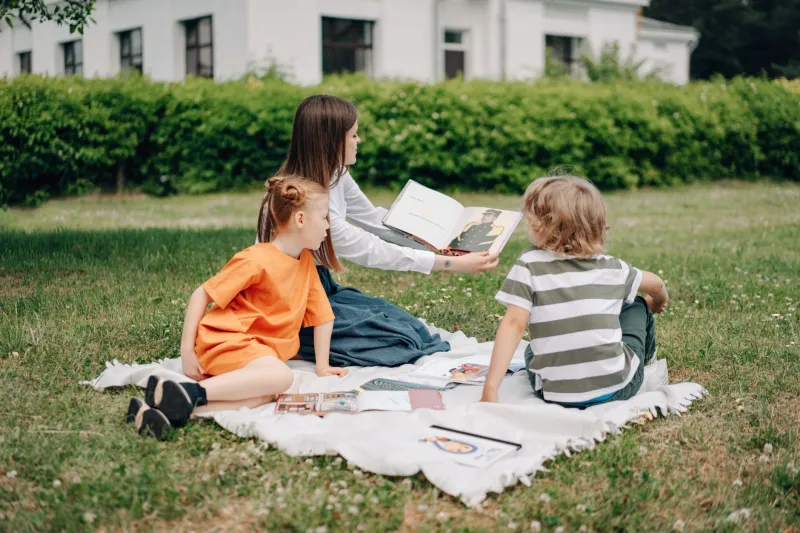
Picture this: your kid is slumped on the couch, book in hand, looking genuinely upset. You peek over their shoulder and realize they're deep in a chapter where two best friends have just had a massive blowup. They're not upset because the story is bad. They're upset because it matters.
That moment — that gut-punch of fictional emotion — is doing something quietly extraordinary. It's giving your child a safe place to feel, think, and figure out how people actually work.
Why Fictional Friendships Hit Different
Here's the thing about real-life social drama: it's loud, it's personal, and it comes with a lot of embarrassment attached. When your best friend stops saving you a seat at lunch, the feelings are overwhelming and the stakes feel enormous. There's no pause button, no time to think.
But when Charlotte cries over Wilbur in Charlotte's Web, or when Opal watches her friendships shift and grow in Because of Winn-Dixie, kids get to process those same emotions at a safe distance. Child psychologists call this "bibliotherapy" — using stories to work through real emotional experiences — and it's been studied enough that educators and therapists take it seriously.
Dr. Natalie Crawford, a child development specialist based in Chicago, puts it plainly: "Books give kids a dress rehearsal. They see a character navigate jealousy or betrayal or the awkwardness of a drifting friendship, and their brain starts quietly mapping that experience onto their own life. It's low-stakes practice for very high-stakes feelings."
The Books That Get It Right
Not every friendship in children's literature is created equal. The books that really move the needle for young readers are the ones that don't clean things up too quickly — the ones that let conflict breathe.
Junie B. Jones by Barbara Park is a great example. Junie B. is loud, impulsive, and constantly putting her foot in her mouth with her friends. She says the wrong thing, she gets jealous, she sometimes acts selfishly. And then she has to figure out how to make it right. Kids who read those books aren't just entertained — they're watching someone who looks a lot like them try, fail, and try again.
The One and Only Ivan takes a different angle, exploring loyalty and what it means to truly show up for someone you care about, even when it costs you something. That kind of friendship modeling — where love looks like sacrifice rather than just fun — is something kids rarely see spelled out so clearly.
For middle-grade readers, Front Desk by Kelly Yang and Merci Suárez Changes Gears by Meg Medina both tackle the complicated reality of friendships that cross cultural and social lines. These stories don't pretend that connection is simple. They show kids working through misunderstandings rooted in genuinely different experiences — which is exactly the kind of nuance that helps readers become more empathetic in their own friend groups.
Conflict Isn't the Villain — Avoidance Is
One of the most valuable things realistic friendship stories do is normalize conflict. American kids are often taught, implicitly, that a good friendship is a smooth one. Fighting means something is broken. Disagreeing means someone is wrong.
But the best children's books push back on that. In The War That Saved My Life by Kimberly Brubaker Bradley, the friendship at the center of the story is built almost entirely through friction — two people who don't know how to trust each other slowly learning to try. In Holes by Louis Sachar, the bonds between characters are forged through hardship and misunderstanding, not ease.
When kids read those stories, they absorb a different message: conflict is part of connection, not proof that connection has failed. That's a genuinely life-changing idea for a nine-year-old who thinks one argument means a friendship is over.
"We see a lot of kids who have very black-and-white thinking about relationships," says school counselor Marcus Webb, who works with elementary students in Atlanta. "Either someone is your best friend or they're your enemy. Books that show the gray area — the friend who hurt you but didn't mean to, the misunderstanding that took time to untangle — those stories do real work in shifting that thinking."
How to Make the Magic Stick
Reading a book about friendship is great. Talking about it afterward is even better. You don't need to turn it into a lesson — kids will tune that out fast. But a few casual questions can open up surprisingly rich conversations.
- "Did you think what [character] did was fair?" This invites kids to think critically about behavior rather than just accepting it.
- "Have you ever felt like [character] did in that scene?" This builds the bridge between fiction and real life without forcing it.
- "What do you think [character] should have done differently?" This is conflict-resolution practice disguised as book chat.
The goal isn't to extract a moral. It's to let the story linger a little longer, to give kids a chance to sit with the feelings the book stirred up and actually examine them.
Stories Are Social Practice
Every time a young reader watches two characters navigate a falling-out and find their way back to each other, they're building a kind of internal library — a collection of social scripts and emotional reference points they can draw on when their own friendships get complicated.
That's not a small thing. In a world where kids are spending more time online and less time in the slow, unpredictable work of in-person relationship-building, books that depict the full texture of friendship — the joy and the mess and the repair — might be more important than ever.
So the next time your kid gets teary over a fictional fight between fictional friends, resist the urge to reassure them it's just a story. Because in the ways that really matter, it isn't.