Panels, Pictures, and Pages: How Comics Are Turning Reluctant Readers Into Book Lovers
Every parent knows the feeling. You hand your kid a book — a good one, the kind you loved at their age — and watch their face fall flat. They flip through a few pages, set it down, and drift toward literally anything else. The tablet. The dog. The ceiling fan.
If that sounds familiar, here's something worth knowing: your child might not be a reluctant reader. They might just be a reluctant chapter-book reader. And that distinction matters more than most people realize.
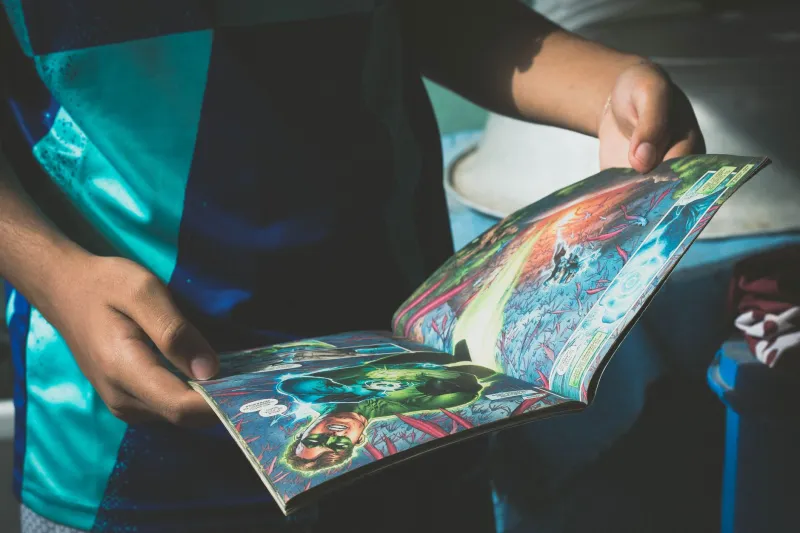
Graphic novels and comics have quietly become one of the most powerful tools in the world of children's literacy — not as a workaround, not as a consolation prize, but as a genuinely effective format that meets certain kids exactly where their brains are.
Why Some Kids' Brains Just Work This Way
Reading a traditional novel is actually a pretty complex cognitive task. Your brain has to decode words, build mental images from scratch, track characters and plot, and sustain attention — all at once, with zero visual support. For kids who are still developing those skills, or who process information more visually, that's a lot to juggle.
Graphic novels change the equation. When text and image work together on the same page, the brain isn't working twice as hard — it's working smarter. Research in visual literacy suggests that reading comics actually requires readers to do something called "closure" — mentally filling in what happens between panels. That's active, imaginative thinking. It's not passive at all.
Dr. Meryl Jaffe, an educator and advocate for comics in the classroom, has long argued that graphic novels build the same critical reading skills as prose: inference, sequencing, vocabulary in context, and emotional comprehension. The format is different. The brain work? Surprisingly similar.
What Librarians Are Seeing on the Front Lines
Talk to any school librarian in the US right now and you'll hear a version of the same story: the graphic novel section is the busiest corner of the room.
"I have kids who told me they hated reading," says one middle school librarian in Ohio, "and then they picked up Dog Man or Smile and suddenly they're asking me what else we have. That's not a small thing. That's a reader being born."
Librarians point to a few titles again and again when it comes to reluctant readers at different ages:
- Early readers (ages 5–8): Elephant & Piggie by Mo Willems, Narwhal and Jelly by Ben Clanton, and Big Nate by Lincoln Peirce tend to hook kids with humor and simple panel structures.
- Middle grade (ages 8–12): Dog Man by Dav Pilkey, Amulet by Kazu Kibuishi, Smile by Raina Telgemeier, and Real Friends by Shannon Hale are perennial favorites that blend big emotions with visual storytelling.
- Older or more advanced readers: March by John Lewis, Hey, Kiddo by Jarrett J. Krosoczka, and New Kid by Jerry Craft tackle heavier themes with sophisticated visual craft.
The key, librarians say, is letting kids self-select. Forcing a specific title rarely works. Letting a kid wander into the graphic novel section and pick up whatever catches their eye? That works almost every time.
Flipping the Script on "Real" Reading
Here's the thing that trips a lot of parents up: the idea that graphic novels are somehow less legitimate than prose books. Maybe you grew up hearing that comics were a distraction from "real" reading. Maybe you still feel a little guilty when your kid chooses Captain Underpants over Charlotte's Web.
It's worth letting that guilt go.
Studies consistently show that kids who read graphic novels don't stop there — they often use them as a bridge to longer, text-heavy books. Dav Pilkey, the creator of Dog Man and Captain Underpants, has spoken openly about being a struggling reader himself and how drawing and storytelling became his way into literacy. His books are now responsible for getting millions of kids to read voluntarily. That's not a small deal.
The goal of reading isn't the format. The goal is comprehension, imagination, empathy, and the habit of engaging with stories. Graphic novels do all of that.
Signs Your Child Might Thrive With Visual Storytelling
Not every kid who struggles with chapter books will automatically love graphic novels — but there are some patterns worth watching for:
- They gravitate toward illustrated books long past the "picture book" age. If your 9-year-old still reaches for heavily illustrated books, that's a clue about how they process information.
- They lose the plot easily in text-heavy stories. If your child frequently asks "wait, what's happening?" while reading prose, the visual scaffolding of a graphic novel might help them track the story more easily.
- They're naturally visual or artistic. Kids who love to draw, who notice details in movies, or who think in pictures often find graphic novels feel more intuitive.
- They read quickly but retain little. Some kids race through words without actually absorbing meaning. The pacing built into graphic novels — where you have to slow down and "read" the images too — can actually improve comprehension.
How to Bring Comics Into Your Home Without Making It a Whole Thing
The best approach is a low-pressure one. You don't need to announce that you're "trying something new" or make it feel like a reading intervention. Just make graphic novels available.
Browse your local library's graphic novel section together. Let your kid lead. If they grab something, great. If they want to check out three volumes of Amulet in one trip, let them. Follow their enthusiasm wherever it goes.
If you want to go a step further, read alongside them. Ask questions about what's happening between the panels — that's where a lot of the storytelling actually lives. "What do you think happened right before this scene?" is a question that sparks great conversations and builds real reading comprehension skills.
And if your child eventually wants to try writing their own comic? Encourage it wholeheartedly. Creating comics requires plot structure, dialogue, character development, and visual planning. It's storytelling in one of its most complete forms.
The Bottom Line for Growing Readers
At Story Sprout, we believe that every kid has a reading identity waiting to bloom — it just doesn't always look the same. For some kids, that identity starts with a chapter book. For others, it starts with a panel of a cartoon dog wearing a cape.
Both are real. Both count. And both can lead to a lifetime of loving stories.
If your child has been labeled a reluctant reader, consider the possibility that they haven't found their format yet. Comics and graphic novels might just be the thing that changes everything — not because they're easier, but because they're exactly right for how that particular kid's brain works.
That's not settling. That's sprouting.