Hey, You: 12 Books Where the Narrator Knows the Reader Is Right There
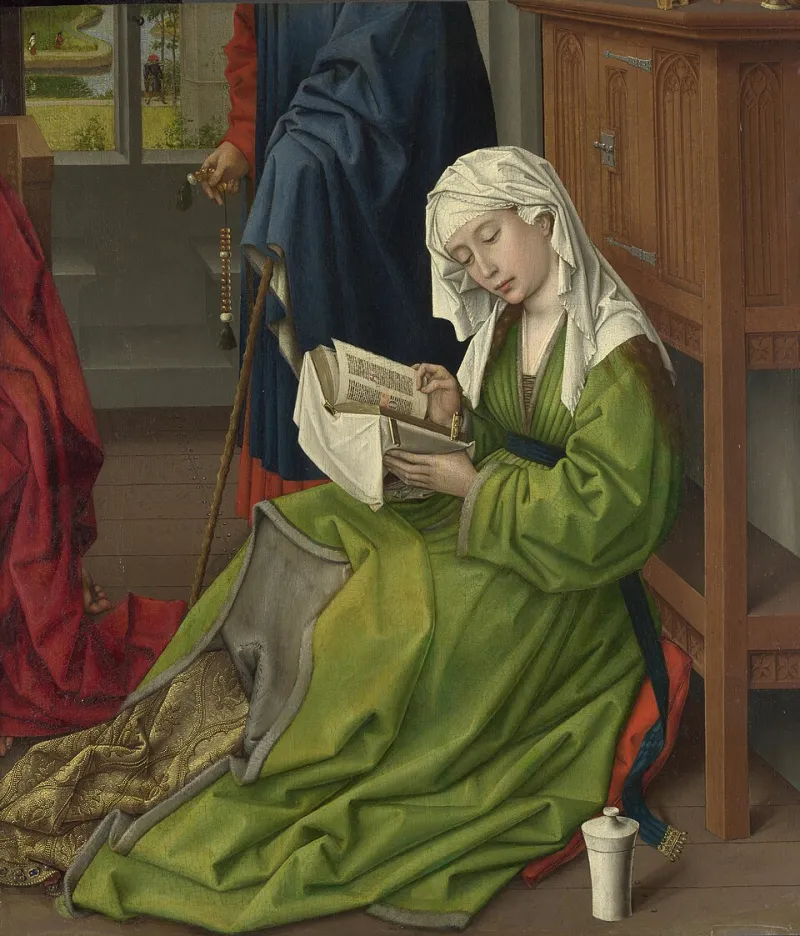
Photo: Rogier van der Weyden, Public domain, via Wikimedia Commons
Some books hand you a story. A few of them look up from the page and hand you a role in it.
You have seen the effect. A kid who has been slumped sideways in a chair suddenly sits up and says 'wait, is the book talking to me?' That is the fourth wall coming down, and for a certain kind of young reader it is the moment reading stops feeling like a school task and starts feeling like being let in on something.
The technical term is metalepsis, which sounds like a dental procedure. In practice it is simple: the narrator knows there is a reader on the other side of the page and behaves accordingly. Threatens. Begs. Argues. Warns. Sneaks in a footnote. Tells you to turn the page slowly because something is waiting.
Why Direct Address Works So Well
Direct address flips the power dynamic. A kid reading a standard third-person novel is a passenger. A kid reading a narrator who is openly talking to them is a participant, and possibly an accomplice. That shift does real work.
For younger children, it is pure cause and effect — shake the book, tilt the page, say the magic word, and something happens. That is the first big lesson of literacy: marks on a page make things occur.
For older kids, the appeal is different. Meta-fiction is joke-literate. It rewards readers for noticing how stories are built, and tweens are already obsessed with how things are built. A narrator who admits to editorializing is giving them the tools to spot it everywhere else. It is funny, and funny is the most reliable gateway into a habit.
Picture Books That Break the Wall
The Monster at the End of This Book by Jon Stone. Grover spends the entire story begging you not to turn the page, which of course guarantees you will. Fifty-plus years old and still the best first meta-fiction experience in print.
Don't Let the Pigeon Drive the Bus! by Mo Willems. The pigeon pleads directly with the reader, and the reader is handed actual authority. Kids take that job extremely seriously.
We Are in a Book! by Mo Willems. Gerald and Piggie discover they are inside a book and that the story ends when the reader reaches the last page. It is funnier — and slightly sadder — than it has any right to be.
Press Here by Hervé Tullet. Instructions on the page produce effects the kid believes they caused. Physics as a magic trick.
The Book with No Pictures by B.J. Novak. The adult is forced to read ridiculous words aloud, which is the greatest thing that has ever happened to a six-year-old.
Battle Bunny by Jon Scieszka and Mac Barnett. A kid scribbles over a treacly picture book, turning it into a monster story. The best possible argument for marginalia.
Early Chapter Books and Middle Grade
The 13-Story Treehouse by Andy Griffiths. The narrator keeps interrupting, lampshading, and warning the reader that things are about to get worse. Reluctant readers eat this series with a spoon.
A Series of Unfortunate Events by Lemony Snicket. The narrator constantly addresses the reader, defines words sideways, and begs you to close the book immediately. The gothic jokes land harder because someone is telling them to you personally.
The Name of This Book Is Secret by Pseudonymous Bosch. The author claims he cannot reveal what the book is about, which is the most effective hook in children's publishing.
A Tale Dark & Grimm by Adam Gidwitz. The narrator inserts himself between the violence and the reader to explain, complain, and occasionally flee. It is the funniest possible way to teach story structure.
The Book That No One Wanted to Read by Richard Ayoade. Told largely by the book itself, which has opinions about being read. Weird, dry, and perfect for the kid who has heard 'you will love this one' too many times.
The Princess Bride by William Goldman. Best saved for the eleven-and-up crowd. The framing device — an abridged 'good parts' version of a much longer fake classic — is a fourth-wall bit that has fooled readers for decades and gives kids a great lesson in unreliable narrators.
A Brief Nod to the Choose-Your-Own Adventure Shelf
Interactive format is the other side of the same coin. Any kid who loves a narrator who talks to them will usually fall for a book that actually takes orders. The classic Choose Your Own Adventure line and the newer interactive graphic novel series on the market both give the reader a steering wheel.
Reading These Aloud Is the Whole Trick
Meta-fiction is a shared activity. The narrator's jokes only land if someone reacts, so read these out loud and commit to the bit. Do the warning voice. Pause where the book pauses. If the pigeon asks a question, let the kid answer it.
A quick note for grown-ups: these books teach more than humor. When a narrator insists they are telling the truth, ask the kid whether they buy it. When a narrator claims the story ends at the last page, ask what else might happen. You are not running a lesson. You are gossiping about a mutual acquaintance, and that is exactly where a lot of reading lives get made.
Then Hand Them the Pen
The natural next move, once a kid is thoroughly used to being spoken to by a book, is to write one that speaks back. The assignment practically writes itself: you are the narrator, your reader is holding the book right now, and you need to convince them of something. Warning, dare, apology, sales pitch — any of those will do.
Start with one line that only makes sense if someone is reading it. 'Put the book down and nobody gets hurt.' They will take it from there.